
A contractor client called us in a panic this spring. A competitor two towns over had just cracked 200 Google reviews. He had six. Same trade, same service radius, same prices. The guy with 200 reviews was booking three weeks out. Our client was still waiting on jobs to come in through word of mouth.
Review count is a trust signal before it’s anything else. A shopper scanning search results treats six reviews as “new and unproven” and two hundred as “everyone already checked this out for me.” That gap compounds: more reviews pull more clicks, more clicks pull more calls, and Google’s own local ranking factors lean on review volume and recency too.
The fix is not complicated. It’s slow, and it has rules that are easy to break without noticing.
Here’s the part most owners skip past: the businesses winning the review count aren’t getting better service than everyone else. They’re asking more consistently, at a better moment, through a channel people actually check. The service quality has to be there first, but once it is, review count becomes a math problem you can work on deliberately instead of a lucky accident you hope happens.
What Google Will Shut You Down For
Google’s own guidance is specific, not vague corporate language you have to interpret: “Reviews and other user contributions to Google Maps must reflect a genuine experience.” On incentives, it goes further: “Offering incentives, like free or discounted goods or services, in exchange for customers to post reviews, change reviews, or remove negative reviews is considered fake engagement and is strictly prohibited.”
That second line catches more businesses than the first one. A free appetizer for a five-star review. A discount code for “leaving us feedback.” A raffle entry per review. All of it falls under the same rule, and the penalty isn’t a warning email. Google can freeze new reviews on your profile for a set period, unpublish the ones you already earned, or post a visible notice telling shoppers you got caught. That notice does more damage than the six reviews you started with. Review signals feed into how local search results get ranked, so a frozen profile doesn’t just lose reviews, it loses the ranking lift the reviews were supposed to buy.
Fake engagement covers more than paid reviews. It also covers reviews from employees, reviews from accounts with no real connection to the business, and reviews posted in a sudden unnatural burst, say thirty reviews in two days after months of none. Google’s systems flag the pattern, not just the individual review, which is why one bad batch of incentivized reviews can put a whole profile under review even if most of the existing reviews were earned honestly.
Review Gating Is the Shortcut Everyone Tries First
Here’s the honest part: review gating works, for a while. It means routing happy customers to the public review link and routing unhappy ones to a private feedback form instead, so only good experiences become public reviews. A lot of review-request software still ships with this as a default setting, which tells you how common it is.
It’s also exactly what the fake engagement policy targets. Filtering who gets asked to leave a public review based on how happy they already are is the textbook version of content that doesn’t reflect a genuine mix of experience. The pattern is detectable too: a suspiciously perfect rating with almost nothing between 2 and 4 stars. Get caught and the business eats the same penalty as paying for reviews outright.
The alternative is less satisfying: ask everyone, let the stars fall where they fall, and fix whatever is generating the one-star reviews instead of hiding them from the flow.
A lot of this software got built by people solving a product metric, not a policy problem; “review funnel” sounds like a neutral feature until you read what it actually routes around. If a vendor pitches you a tool that sorts customers before they leave a review, ask directly whether it’s filtering by sentiment. If the answer is yes, or if the salesperson gets vague about it, that’s gating with a nicer name.
The Ask That Gets a Yes
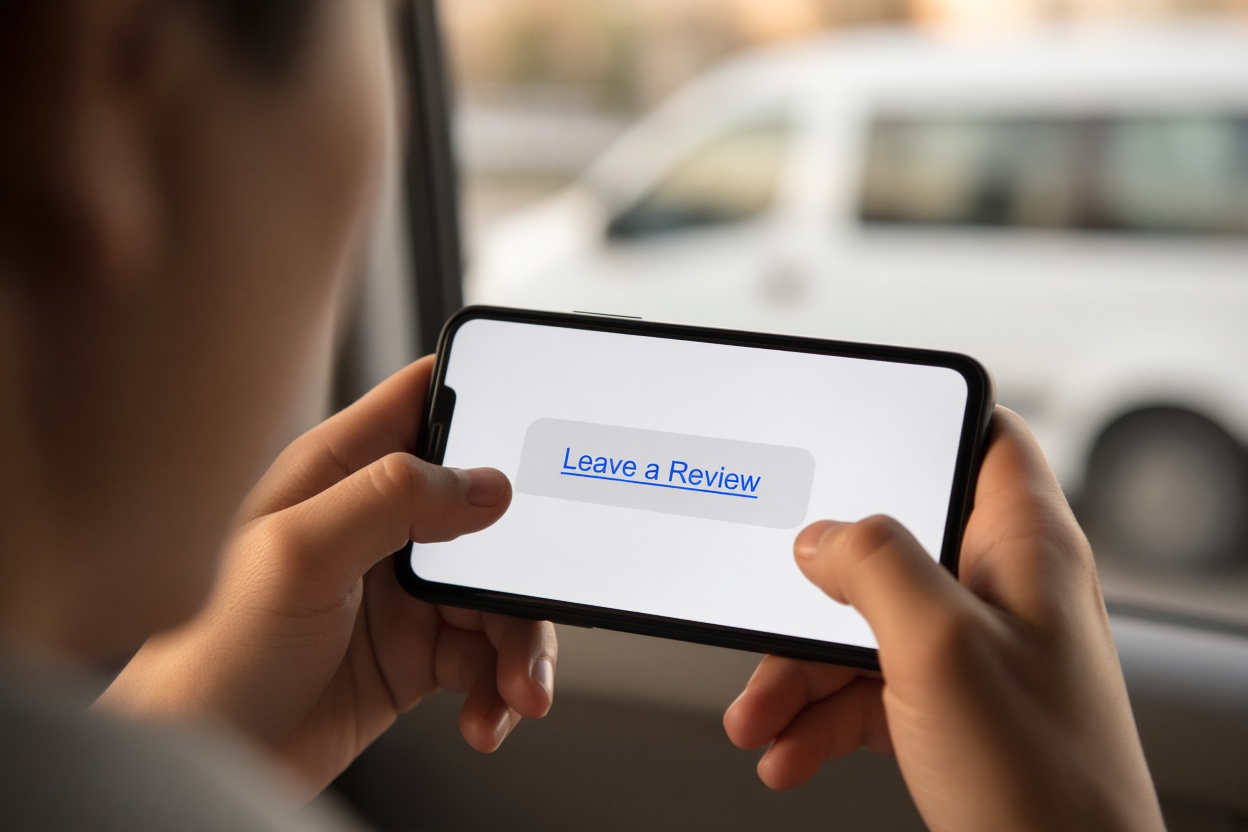
Timing beats wording almost every time. A painter asking the week a job wraps gets a different response than one asking two months later, once the memory has faded into “yeah, it was fine.”
Channel matters nearly as much. Text messages get opened. Email requests sit in a promotions folder next to a dozen other asks for feedback. A short text with a direct link, sent within 48 hours of the job finishing, outperforms almost any other method we’ve tested for service businesses.
The wording should ask for exactly one thing. “We’d love it if you could share how the job went” beats three paragraphs explaining why reviews matter to a small business. If the link lives on your Google Business Profile, getting that profile set up correctly matters more than the wording of the ask, because a broken or unclaimed profile means the request has nowhere good to land.
Automating the Request Without Sounding Like a Robot
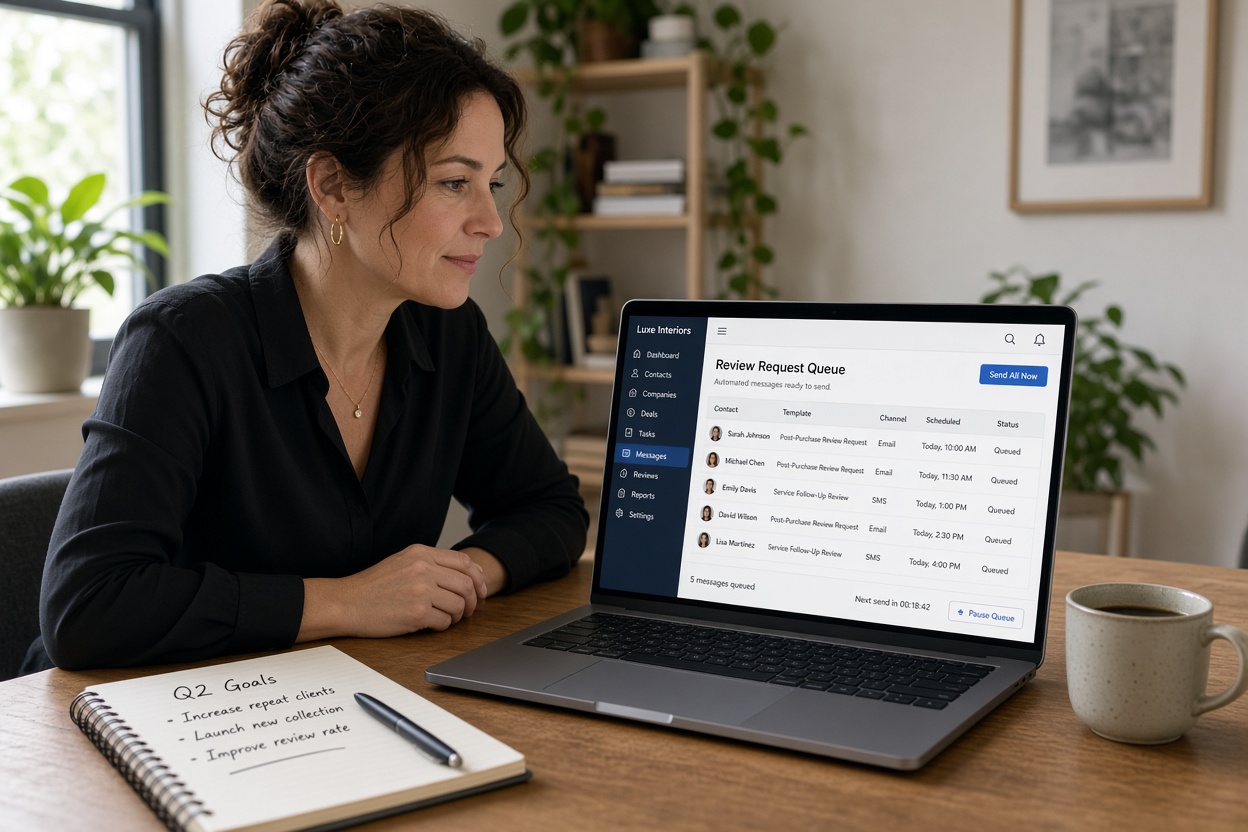
Automation is fine. Automation that never varies is the problem. A request that fires from the same template every time, worded identically down to the punctuation, starts to read like a bot wrote it, and customers notice.
A few things keep an automated request from feeling automated:
- Vary the trigger by job type, not just the calendar. A roof repair and a free estimate call shouldn’t get the same follow-up message three days later.
- Use the customer’s name and one real detail from the job, pulled from whatever system tracks the work.
- Stop sending once someone has said no, left a review, or asked to be removed. A second request to someone who already responded is the fastest way to get flagged as spam yourself.
None of this needs to be built from scratch. Most CRMs and a handful of dedicated review tools handle the trigger and the message queue. The part that needs real attention is keeping the system itself maintained so it doesn’t quietly break after a CRM update or a change in how jobs get logged, which is ongoing upkeep more than a one-time setup task.
The Customer Who Says Yes and Never Follows Through
This happens constantly: a customer says “sure, happy to,” means it, and never opens the link. Not because they changed their mind. Life got in the way and the text got buried under forty other texts.
One follow-up, sent four or five days later, catches a real share of these. Not a guilt trip, just a plain reminder: no pressure if you’re busy, here’s that link again in case it got lost. After that, let it go. A third ask starts to feel like nagging, and a customer who feels nagged is more likely to write a review about the nagging than about the original job.
Businesses stuck at low review counts usually aren’t being ignored. They’re sending one request and stopping, which catches maybe a third of the people who would have said yes with a second nudge.
Worth saying plainly: stop at two tries. We’ve seen owners get frustrated and send a third message, sometimes with a line like “it would really help us out,” and that’s the message customers remember, not the service that was fine six days ago. A review is a favor, not a debt the customer owes you for doing the job you were paid to do.
Where the Incentive Line Sits
The rule sounds absolute, no incentives, but there’s a real distinction underneath it worth knowing. You can’t offer anything in exchange for a review, positive or otherwise. You can run a general loyalty program, a referral discount, or a service-quality survey that has nothing to do with whether or where someone posts a review.
The test is whether the review itself is the condition. “Leave us a review and get 10% off” is a violation. “All customers get 10% off their next visit,” with a separate and optional mention of the Google review, is not, because the discount isn’t tied to the review happening. That line is thin enough that well-meaning owners cross it by accident, usually by wording a loyalty perk so it sounds conditional even when it technically isn’t.
The fix is almost always wording, not strategy. A loyalty punch card that says “leave a review for your next stamp” is a violation; the same punch card that says “get a stamp for every visit” with a review request mentioned separately in the same conversation is fine. Same program, same business, same customer walking out the door. The difference is whether the sentence ties the reward to the review.
A Number You Can Hit in 90 Days
We won’t invent a guaranteed number here, because it depends on how many transactions a business runs in three months and how many of those customers get asked at all. What’s realistic is the conversion rate once the timing, channel and follow-up are right: a well-run request process typically converts somewhere in the range of 10 to 20 percent of customers asked into a posted review, against the 1 to 2 percent who leave one unprompted.
Run the math on your own volume before promising yourself a number. Forty customers a month, all asked with a same-week text, puts a reasonable 90-day target somewhere around 12 to 24 new reviews, not the 200 the competitor down the road spent years building.
That’s slower than anyone wants to hear. It’s also the version that doesn’t end with a restriction notice sitting on your profile. If you want help setting up the request flow, the CRM triggers and the Business Profile side of this so it runs without needing your attention every week, get in touch about review system setup.