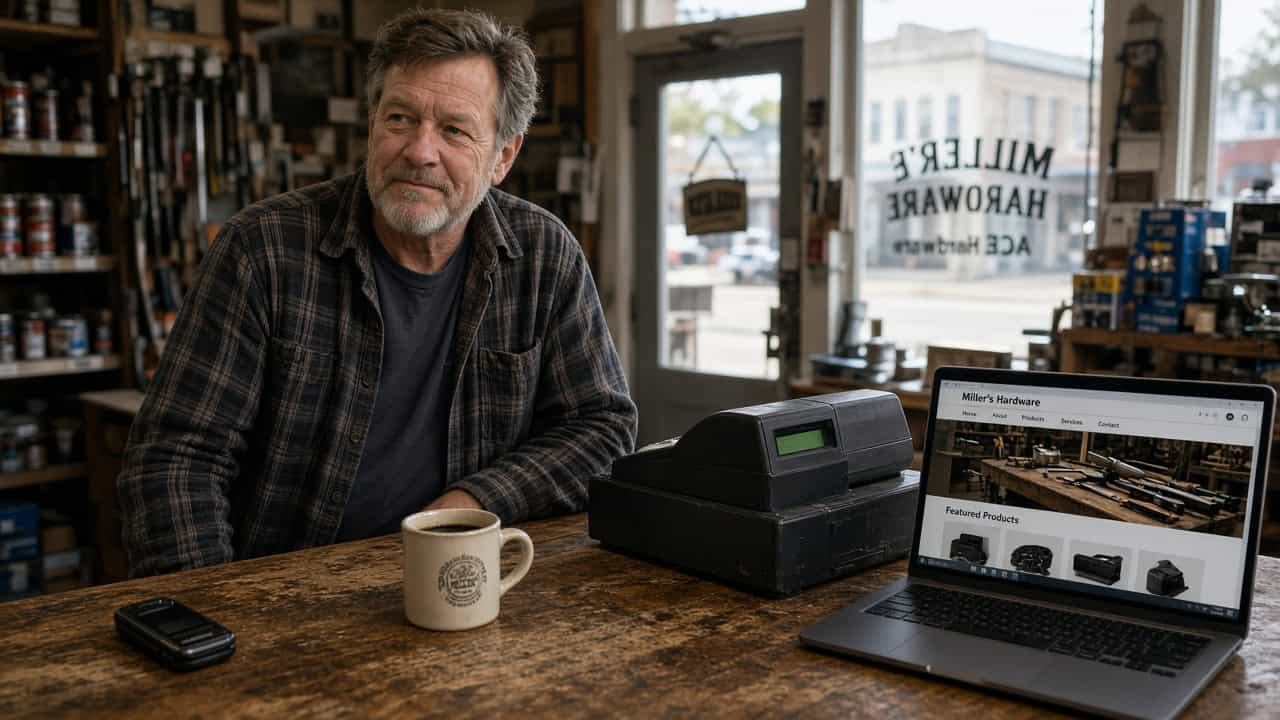
We’ve sat across the table from a lot of owners who put off building a website. Not because they didn’t know they needed one. Because they weren’t sure a website would do anything a good storefront and word of mouth hadn’t already done.
Most of them were right to wait. That’s the part nobody on the agency side likes to say out loud. If your customers find you through the drive past, the regulars, and the listing your grandfather placed in the phone book, a website doesn’t fix a problem you don’t have. We’ve taken that call. We’ve said so.
Then something shifts. The regulars retire or move. A competitor shows up on the map where your shop used to be the only option. The phone book stops showing up on doorsteps. A family member takes over the store and asks why nobody can find them online. The reason changes. The decision follows.
Here’s what happens after that, from the owners who finally made the call.
Who they are, and how long they held out
The ones who wait the longest aren’t the ones who can’t afford it. They’re the ones who built something on handshake and repeat business, and they’re proud of that. A website felt like admitting the handshake wasn’t enough anymore. Or like hiring a salesperson for a shop that never needed one. They worried it meant real money for something intangible, which is the sticker shock we unpack in what a professional website costs in the Midwest.
We’ve worked with owners who ran the same counter for thirty years without a web address on the door. The website was for businesses that couldn’t keep customers on their own. That’s how more than one of them put it. They weren’t being rude. They were being honest about how they measured success, and a website didn’t factor into it.
There’s a kind of owner who treats the lack of a website as a point of pride. The regulars know where to find them. The suppliers have the number. The chamber of commerce has the listing. If someone needs them, they call. That system worked for decades. The idea of replacing it with a contact form felt like trading a relationship for a transaction.
That changes when the foot traffic thins. Not all at once. A few fewer cars on a Tuesday. A regular who moved across town and can’t remember if the shop is still there. A customer who searched for the product, found a competitor, and never came in.
What pushed the decision
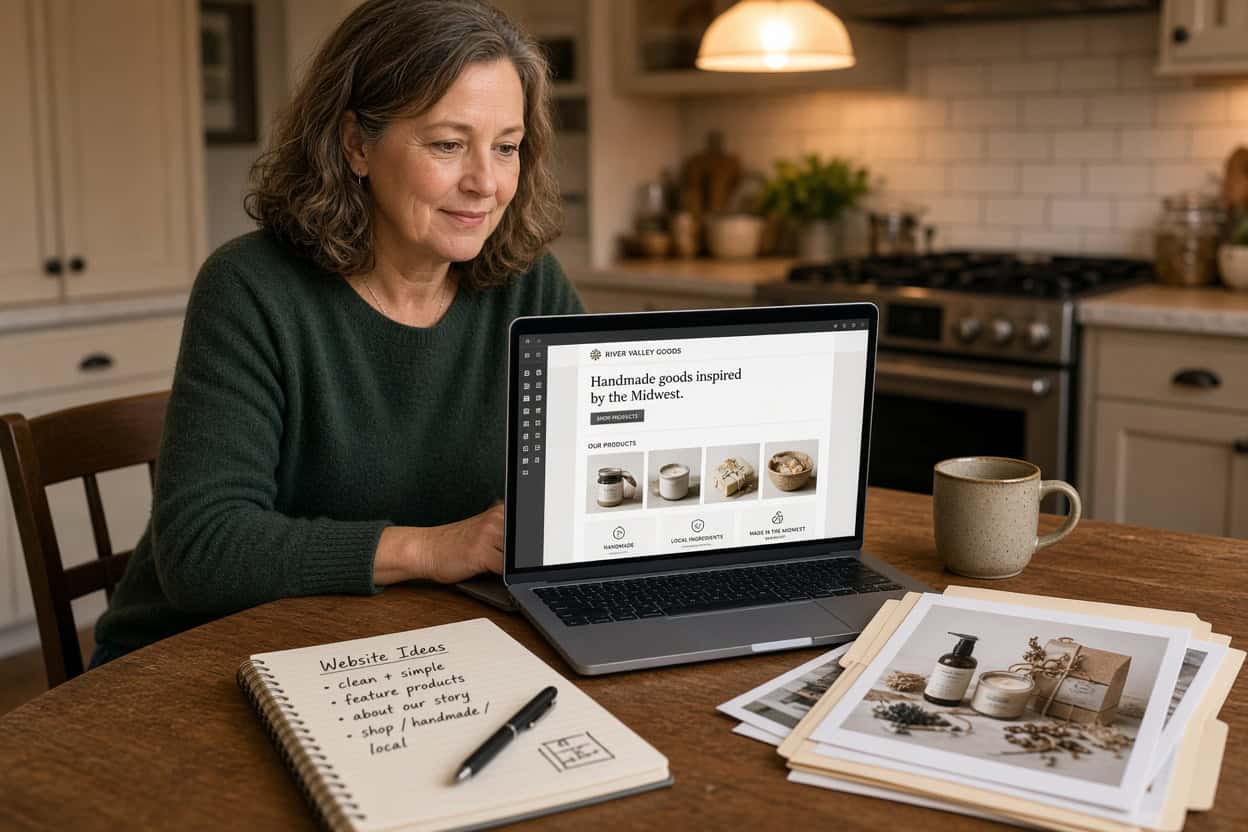
It’s never one thing. It’s the accumulation. One owner called us because a new competitor showed up in the map results above them for their own town’s name. Another because a family member home from college asked why she couldn’t send friends a link to the family business. A third because a supplier asked for a web address on a wholesale form and they had to leave it blank.
The trigger is personal. The thing that makes you pick up the phone is usually small and a little embarrassing. You told yourself you’d get to it. Then someone you respect notices it’s not there, and that’s the moment it stops feeling like a project for later and starts feeling like something you’re behind on.
What we notice is that the owners who call are the ones who’ve already made the decision in their gut. They’re not calling to be sold on the idea. They’re calling because they’ve run out of reasons to put it off and they want someone who won’t make them feel stupid for waiting.
What surprised them about the process
We hear the same thing from nearly every owner who held out for years. They expected the process to take months and cost more than they could justify. The part that surprises them is how much of the work is decisions they’re already good at.
Choosing the photos. Writing the about page in their own voice. Deciding which services to lead with and which ones to mention second. The technical part, the part they were dreading, is our job. The part they were afraid of, being themselves on a page, is the part they’re already qualified for.
The other surprise is the pace. Owners who spent months thinking about it get through the build faster than they expect once they stop bracing. The hardest part is picking which photos to send. The website is the easy part. They’d been the hard part, and they were already done being them.
What they’d tell someone still putting it off
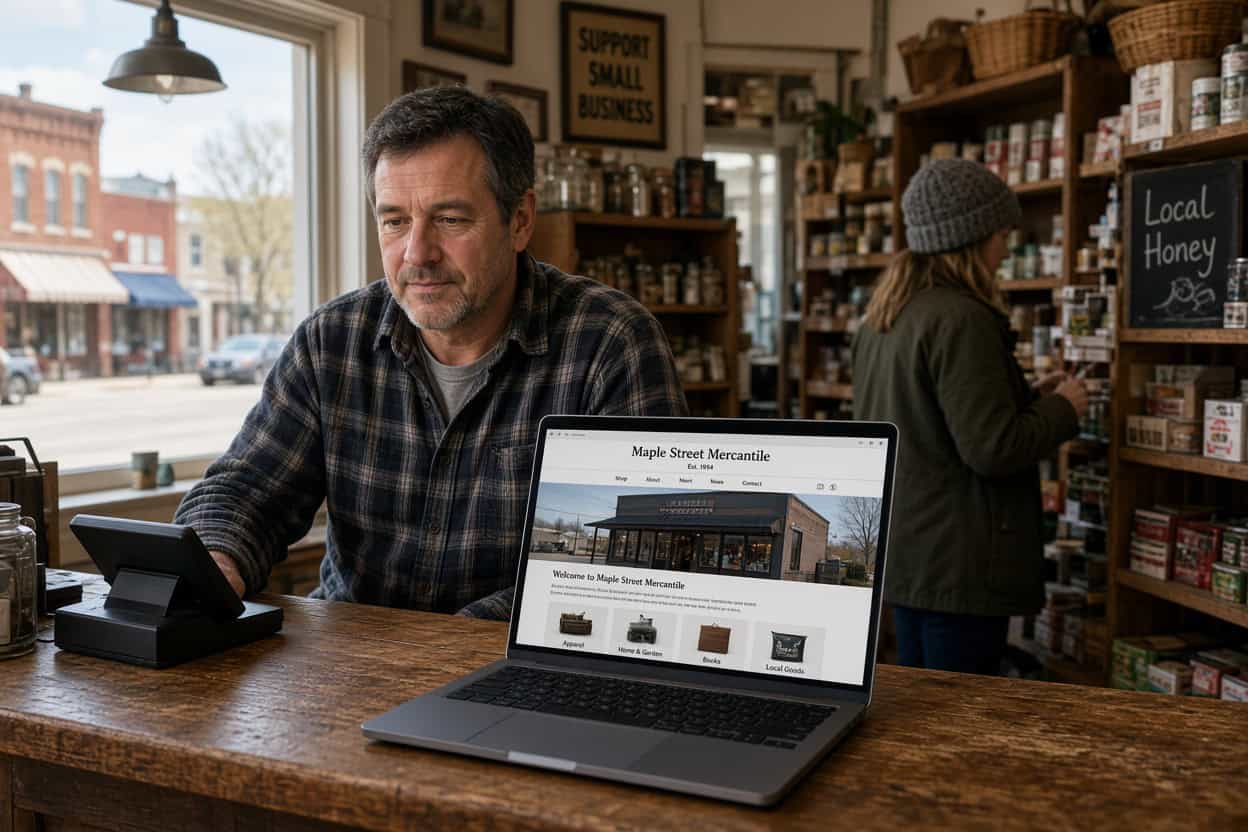
After the site has been live for a few months, the feedback we get back follows a pattern. Here’s what owners tell us they’d say to someone still on the fence.
Don’t wait for the right time. There isn’t one. Pick a month and start.
The part you’re scared of, writing the words, is the part that matters most. People choose you because the about page sounds like you. Write it at your kitchen table if that’s where you think best.
You don’t have to understand the technology. You have to know your own business. The technology is someone else’s job.
Ask the person building your site to show you something they built for a business like yours. Not a demo. A real one. That’s how you know they understand what you sell and who you sell it to.
We point people to our work because that’s the real question. Not whether you need a website. Whether the person building it has done this for a business that looks like yours, in a town that looks like yours.
The honest results so far
We’re not going to tell you a website doubled anyone’s revenue in the first month. That’s not what happens, and we wouldn’t trust anyone who promised it.
What does happen: the phone rings from people who found you on Google instead of driving past. The email form catches someone at eleven at night who wouldn’t have called during business hours. The supplier form has an answer. The family member can share the link.
One owner got a first out-of-town order within the first month of the site going live. A customer two counties over had been looking for that specific product and couldn’t find it closer. The owner had carried it for years. The customer just couldn’t find him. The website didn’t create a new market. It connected an existing one.
The slow part is the part nobody talks about. A site takes a few weeks to show up in search. The first reviews take months. The traffic builds the way reputation builds, one person at a time. The owners who do best are the ones who treat the site like the front door, not the sign on the roof. They update it. They add the new product. They answer the question a customer asked last week by putting it on the page.
That’s the plain version of what a website does. It makes you findable by the person who is already looking for you. Not a different customer. The same one, searching a different way.
Where the skepticism was right
We want to be honest about the part where the holdouts were right.
A website built and left alone is a brochure in a drawer. We’ve seen sites that were published and never updated. They did nothing because nobody could find them and nothing on the page had changed since the year it went up. The owners were right that a website alone doesn’t fix anything. It has to be part of a plan, and it has to be kept current.
We’ve also had owners push back on us about things we thought were obvious. Why put a contact form first when the phone number is what customers use? They were right. If your customers call, the phone number goes first. The form is for people who find you after hours and want to think before they talk. We build it that way now because an owner in a small town told us the form was in the way.
The skepticism that matters most is the one about value. A website costs money and time. If it doesn’t bring in more than it costs, it was a bad investment. We’ve told owners that. We’ve also told them we’d rather build it when they’re ready than talk them into it when they’re not. The ones who come in skeptical and leave satisfied are the ones who refer the next holdout. The ones we talk into it don’t refer anyone because they were never sold on it themselves.
You can read more about how we work and what we believe about building for businesses like yours. We’re not interested in selling you something you don’t need. We’re interested in being the team you call when you decide it’s time.
If you’ve been putting it off, the first conversation doesn’t cost anything. We’ll tell you honestly whether a website is the right move right now or whether you should wait. Sometimes the answer is wait. We’d rather have the trust than the project.